
Author: [email protected]

  • Junior Eurovision 2026 in Malta: Dates, Tickets and Everything You Need to Know

    Junior Eurovision 2026 in Malta: Dates, Tickets and Everything You Need to Know

    Europe’s biggest music contest for young singers is coming to Malta. The 24th Junior Eurovision Song Contest takes place on Saturday 24 October 2026 at the Malta Fairs & Conventions Centre (MFCC) in Ta’ Qali, organised by the European Broadcasting Union (EBU) and host broadcaster PBS. It’s the third time Malta has hosted the contest, after 2014 and 2016, and the first time the contest has ever been held in October.

    A Maltese “festa” on stage

    PBS is transforming the MFCC into a Eurovision Festa Village, inspired by Malta’s village feasts, with colourful façades and traditional balconies built into the stage design. Expect the energy of a summer festa, packed into one night of live television.

    Presented by two Maltese winners

    The show will be hosted by Gaia Cauchi, who won Junior Eurovision for Malta in 2013, Destiny Chukunyere, who won it in 2015, and Keane Cutajar. Having two former winners on stage says a lot about Malta’s proud record in the contest.

    Who’s competing

    Sixteen countries will take part: Albania, Armenia, Cyprus, France, Georgia, Ireland, Italy, Malta, Montenegro, the Netherlands, North Macedonia, Poland, Portugal, San Marino, Spain and Ukraine. Performers are aged between 9 and 14.

    Malta will be represented by Beppe (Beppe Caruana), the 11-year-old winner of The Voice Kids on TVM, with “Blue Bird”: a song about finding magic in simple things, listening to your heart and feeling connected to nature, which Beppe co-wrote.

    Tickets: Jury Final and Final

    There are two shows you can attend at the MFCC:

    • Jury Final, Friday 23 October, 18:30: the dress rehearsal on which the professional juries vote. Tickets from €16.20 (General Standing), with Tiered Back seats at €27 and Side Seats at €37.80.
    • Final, Saturday 24 October, 18:30: the live broadcast. Tickets from €27 (General Standing), with Tiered Back seats at €37.80 and Side Seated at €48.60.

    All prices include the booking fee. Accessibility tickets are available for both shows. The Jury Final is a great-value way to see the full show and a popular option for families.

    FAQ

    When is Junior Eurovision 2026?

    The Final is on Saturday 24 October 2026. The Jury Final is the evening before, Friday 23 October. Both start at 18:30.

    Where is Junior Eurovision 2026 being held?

    At the Malta Fairs & Conventions Centre (MFCC) in Ta’ Qali, Malta.

    Who is representing Malta at Junior Eurovision 2026?

    Beppe, with the song “Blue Bird”.

    How much are Junior Eurovision tickets?

    From €16.20 for the Jury Final and from €27 for the Final, up to €48.60 for side seats at the Final, booking fee included.
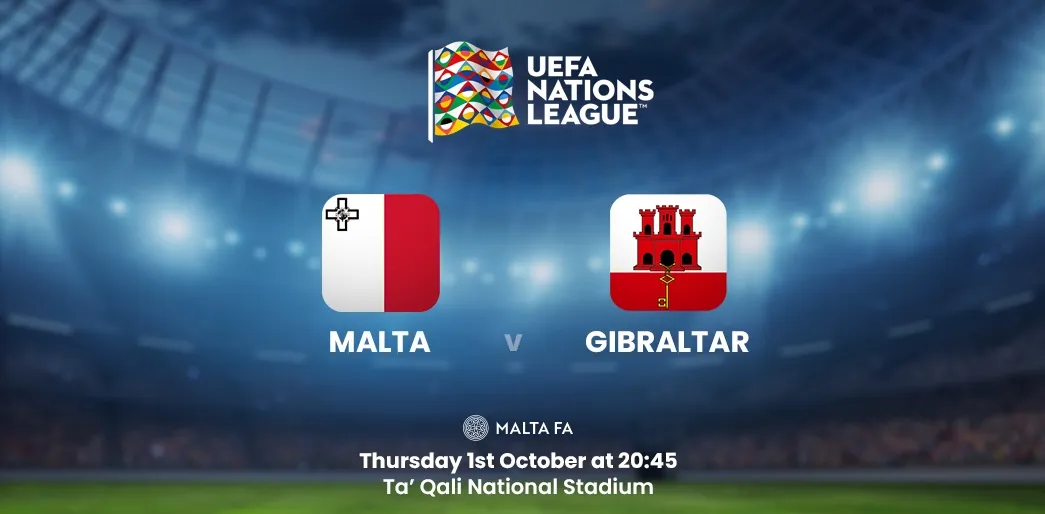

  • Malta v Gibraltar and Malta v Andorra: Nations League Double-Header at Ta’ Qali

    Malta v Gibraltar and Malta v Andorra: Nations League Double-Header at Ta’ Qali

    Malta’s national team is back at the National Stadium in Ta’ Qali for two UEFA Nations League home games in the space of four days. After opening the campaign with a 2-1 comeback win away to Andorra on 24 September (Teddy Teuma scored the late winner), Emilio De Leo’s side sit top of Group D1 and head home with real momentum.

    The fixtures

    • Malta v Gibraltar: Thursday 1 October 2026, kick-off 20:45, Ta’ Qali National Stadium
    • Malta v Andorra: Sunday 4 October 2026, kick-off 18:00, Ta’ Qali National Stadium

    Why these two games matter

    Group D1 is a tight three-team group. Gibraltar and Andorra drew 0-0 on 27 September, which means Malta, with three points from their opening game, are the only side with a win so far. Two home results this week would leave Malta in a commanding position before the final group game away to Gibraltar on 16 November.

    Recent history also favours the home side against Andorra: Malta had gone four Nations League meetings unbeaten against them even before September’s win. Games at this level are usually decided by small margins, though, and a full, loud Ta’ Qali can make the difference.

    Who to watch

    Expect familiar faces in red: the experienced Zach Muscat at the back, Henry Bonello in goal, Matthew Guillaumier in midfield and Teddy Teuma, fresh from his winner in Andorra, pulling the strings in attack.

    Tickets and prices

    Tickets for both matches are on sale now through Eventworks, with seats in the West Stand (West A and West C) and the Millennium Stand.

    • Millennium Stand: €12 for adults, €8 for children, seniors and concessions.
    • West Stand (West A and West C): €20 for adults, €12 for children, seniors and concessions.
    • For the Gibraltar game there’s also a €30 family pack in the Millennium Stand, a good-value option for a night out with the kids.
    • No booking fee is added, so the price you see is the price you pay.

    Buying in advance saves queuing at the turnstiles, and your tickets arrive on your phone straight away.

    Getting to Ta’ Qali

    The National Stadium sits in the heart of Malta at Ta’ Qali, a short drive from Attard, Mosta and Rabat. Parking around the stadium fills up on match nights, so leave a little earlier than you think you need to, or consider car-sharing or the bus.

    FAQ

    When are Malta’s next home Nations League games?

    Malta play Gibraltar on Thursday 1 October 2026 at 20:45 and Andorra on Sunday 4 October 2026 at 18:00, both at the Ta’ Qali National Stadium.

    How much are tickets for Malta v Gibraltar?

    Adult tickets are €12 in the Millennium Stand and €20 in the West Stand. Children, seniors and concessions pay €8 and €12 respectively, and there’s a €30 family pack in the Millennium Stand.

    Where can I buy tickets?

    Official tickets for both games are available on Eventworks.

  • Early bird tickets: how to price your festival tiers

    Early bird tickets: how to price your festival tiers

    Most festivals don’t sell steadily. A rush when tickets go on sale, a long quiet middle, then a scramble in the last weeks. Tiered pricing, starting with early bird tickets, evens that out: fans get a reason to buy now, and you get money in early, when deposits and artist fees fall due. Here is how to set your tiers up.

    Why tiers work

    • Early money. Sales months before the gates open help pay for the stage, the artists and the site long before the weekend.
    • A reason to buy today. Every tier that ends is a price rise fans can see coming. “Tier 1 ends on Friday” sells more tickets than “tickets available”.
    • An early read on demand. How fast each tier sells tells you whether to add capacity, spend more on marketing, or hold your nerve.

    How many tiers

    Three or four works for most festivals:

    1. Early bird: your lowest price, for your most loyal fans.
    2. Tier 1 and Tier 2: the bulk of your sales.
    3. Final release: the highest price, for the last tickets and the late deciders.

    More tiers mean smaller steps and more moments to announce, but also more to manage and explain. Fewer tiers make each step bigger.

    How big each tier should be

    Keep the early bird small enough to sell out quickly. A sold-out tier is news: it is your first announcement, and it tells everyone who waited that prices only go up from here. Put most of your capacity in the middle tiers, and keep a final release for the end.

    Here is a worked example for a 5,000-capacity festival:

    Tier Tickets Price
    Early bird 500 €45
    Tier 1 1,500 €55
    Tier 2 2,000 €65
    Final release 1,000 €75

    Sold out, that is €310,000 in ticket sales, with the average ticket at €62.

    How far apart to price

    Make each step big enough to matter and small enough not to put people off. In the example above, each tier is €10 more than the last: enough to make “buy before Friday” worth listening to, without making a later ticket feel like a penalty. Look at your own audience and your final price, and work back from there.

    When to move on: a sell-out or a date

    A tier can end in two ways:

    • When it sells out. Simple and honest: once the allocation is gone, the next tier is the price.
    • On a date. Useful to create a deadline, for example the day you announce your headliner.

    Many festivals use both: a tier ends on its date, or earlier if it sells out first.

    With Eventworks, you set up each tier as its own ticket type with its own number of tickets, and schedule each on-sale to the minute. Fans who miss a tier can join the waiting list, so you have everyone ready for the next release.

    Avoid the flat middle

    The weeks between the early bird and the final release are where festivals stall. Plan something for every tier change:

    • Line-up news: time each announcement with a tier ending, so the news and the deadline land together.
    • Email your attendees: past and current ticket holders are the fans most likely to buy again. Email them straight from the dashboard when a tier is about to end.
    • Promoters: give each promoter their own link, with commission per event or ticket type, and see who is selling.
    • Codes: coupons for partners, sponsors and early fans.
    • Ads that measure: add your Meta pixel and Google Tag Manager to your shop, so you can see which campaigns sell tickets.

    Other ticket types worth adding

    • Day tickets alongside the full weekend, for fans who can only make one day.
    • Group tickets for friends buying together.
    • VIP with its own entrance, viewing area or extras.
    • Add-ons at checkout: camping, parking, merch or a festival cup.

    Who pays the fee on an early bird?

    Your early bird price is your headline number, so think about how it reads. With Eventworks there is one fee, 8% of each paid ticket with every card charge, bank fee and VAT included, and you choose who pays it: pass it to fans, absorb it or split it. Absorbing it on the early bird keeps that headline price clean. We explain the three options in Booking fees: who should pay, fans or you?

    Watch sales as they happen

    The live dashboard shows sales for every ticket type as they happen, and reports break sales down by ticket type and reseller. If a tier sells out in hours, you know you have room to move prices up. If it stalls, you know it is time for your next announcement.

    See how festivals and club nights run on Eventworks on our festivals and nightlife page, or book a demo and we’ll set up your tiers with you.

  • How to run event check-in without queues

    How to run event check-in without queues

    Before the first song, speech or game, fans meet your door. A quick, calm entry sets the mood for the whole night; a long queue in the cold does the opposite, and a crush at the gate is a safety problem. Here is how to plan check-in so everyone gets in quickly and safely.

    Plan for the peak, not the average

    Fans don’t arrive evenly. Most turn up in a short window: when doors open, just before the headliner or right before the start. So work out your busiest minute, not your average one.

    The numbers from a real show make the point. When 40,000 fans came to see Pitbull at Ta’ Qali, scanning averaged 207 scans a minute across the site, and the busiest single minute admitted 838 people: four times the average. Entry that copes with the average will still queue at the peak.

    To size your entrances:

    1. Estimate your peak arrivals per minute. Past events, the timings on your tickets and when your public transport arrives all help.
    2. Time one lane. At a smaller event or a rehearsal, count how many fans one steward scans in a minute, with phones out and bags checked.
    3. Divide, then add a spare. Peak arrivals divided by one lane’s speed gives the lanes you need. Add at least one spare for a problem ticket or a steward’s break.

    Scan on phones your team already has

    Entry doesn’t need special hardware. With Eventworks, every steward installs the Eventworks scanner app on a phone and scans tickets, passes and access cards straight away. For your busiest entrances, dedicated laser scanners are available to rent, and venues with turnstiles can connect entry to their gates, so tickets and access cards open the turnstiles.

    Keep scanning when the Wi-Fi drops

    A big crowd can overload the mobile network just when you need it most. Make sure your scanning doesn’t depend on it.

    Eventworks scanning works offline. Each ticket is checked on the phone itself, and everything syncs when the connection comes back. Tickets aren’t preloaded onto the devices, so a ticket bought an hour before doors still opens the door.

    Stop copied tickets at the gate

    A screenshot of a ticket looks exactly like the real thing. What matters is that it can only get in once. Each Eventworks ticket is refused if it has already been scanned, and every scan is on record with the reason a ticket was refused: already in, wrong day or not valid. Your stewards see the answer in a fraction of a second and can send the fan to the help point instead of arguing at the lane.

    Brief the people on the door

    Your stewards are the face of your event. Before doors:

    • Give everyone the right access. Door Manager and Scanner roles show staff only what they need.
    • Explain what each result means. Valid, already in, wrong day: and what to do for each.
    • Set up a help point. Fans who can’t find their ticket shouldn’t hold up a lane. Someone with access to orders at the help point can find the order and resend the ticket by email or WhatsApp.
    • Test every device days before. Log in, scan a test ticket and check the result on every phone, with time to swap any that don’t work.
    • Bring power. Charged phones and a power bank per lane.

    Handle guests and walk-ups without clipboards

    Guest lists and door sales are where queues often start.

    • Guest lists: add guests one by one or import a spreadsheet, then check them in like any other ticket. No printed list, no crossing out names.
    • Box office: sell at the door from the same ticket stock as your online shop, cash or card, so you never sell a place twice.

    Watch arrivals live and move your team

    Live check-in shows arrivals by ticket type and show as they happen. If one entrance backs up while another is quiet, you see it in time to move stewards or open another lane.

    At the Pitbull show, the live numbers gave the organisers, the performers’ team and the safety officers a headcount for every area of the venue at once, and the crew opened extra lanes and moved queuing barriers whenever a zone filled faster than planned. Read the full story.

    Your door checklist

    • Estimate your peak arrivals per minute.
    • Time one lane, then plan lanes for the peak, plus a spare.
    • Install the scanner app and give each steward the right role.
    • Test every device days before the event.
    • Charge phones and bring power banks.
    • Import your guest lists.
    • Set up box office sales on the same stock.
    • Brief stewards on each scan result and the help point.
    • Open doors early enough for the peak.
    • Watch arrivals live and move your team as queues build.

    See everything the door can do on our entry page, or book a demo and we’ll walk through the entry plan for your next event.